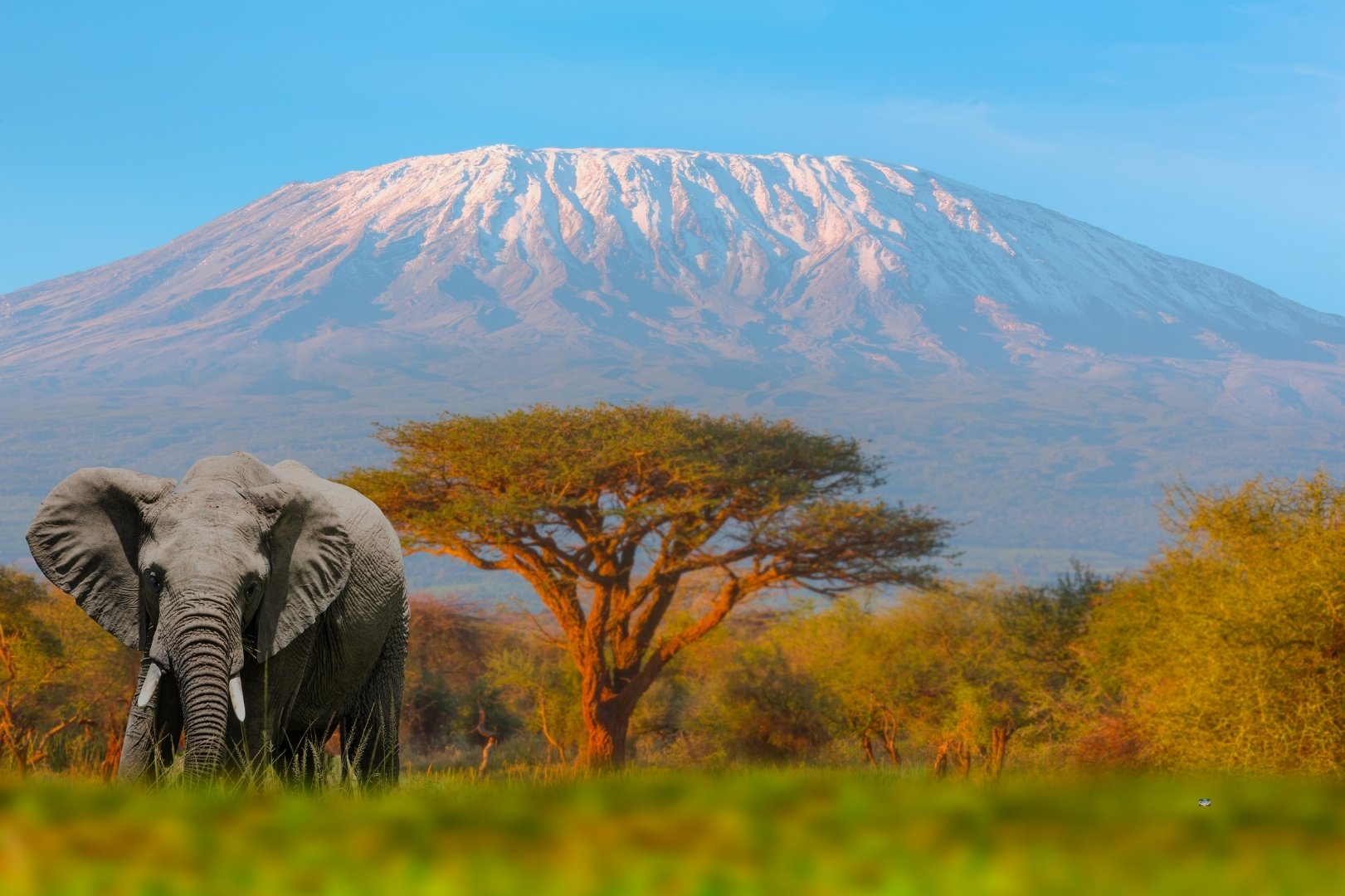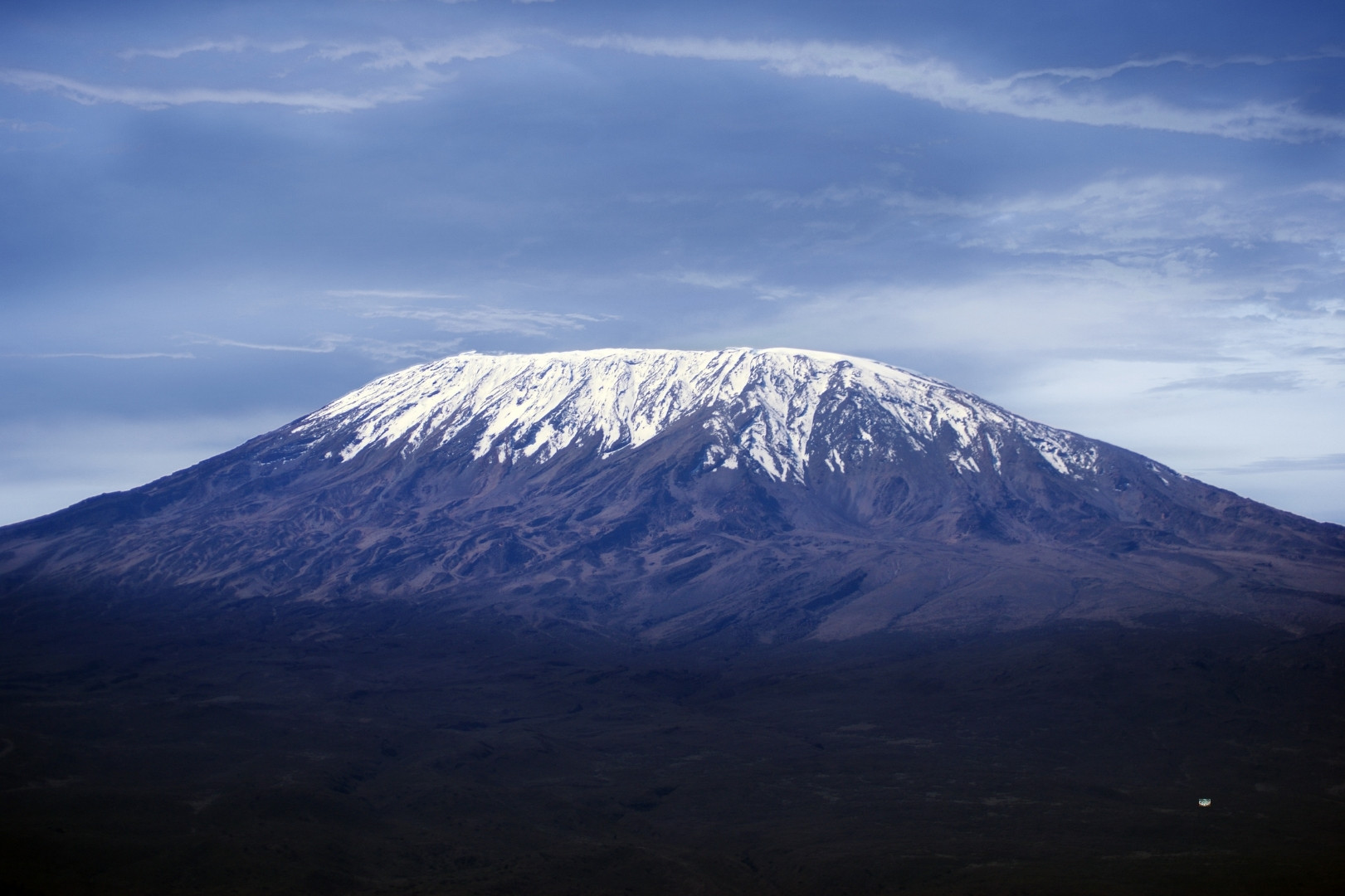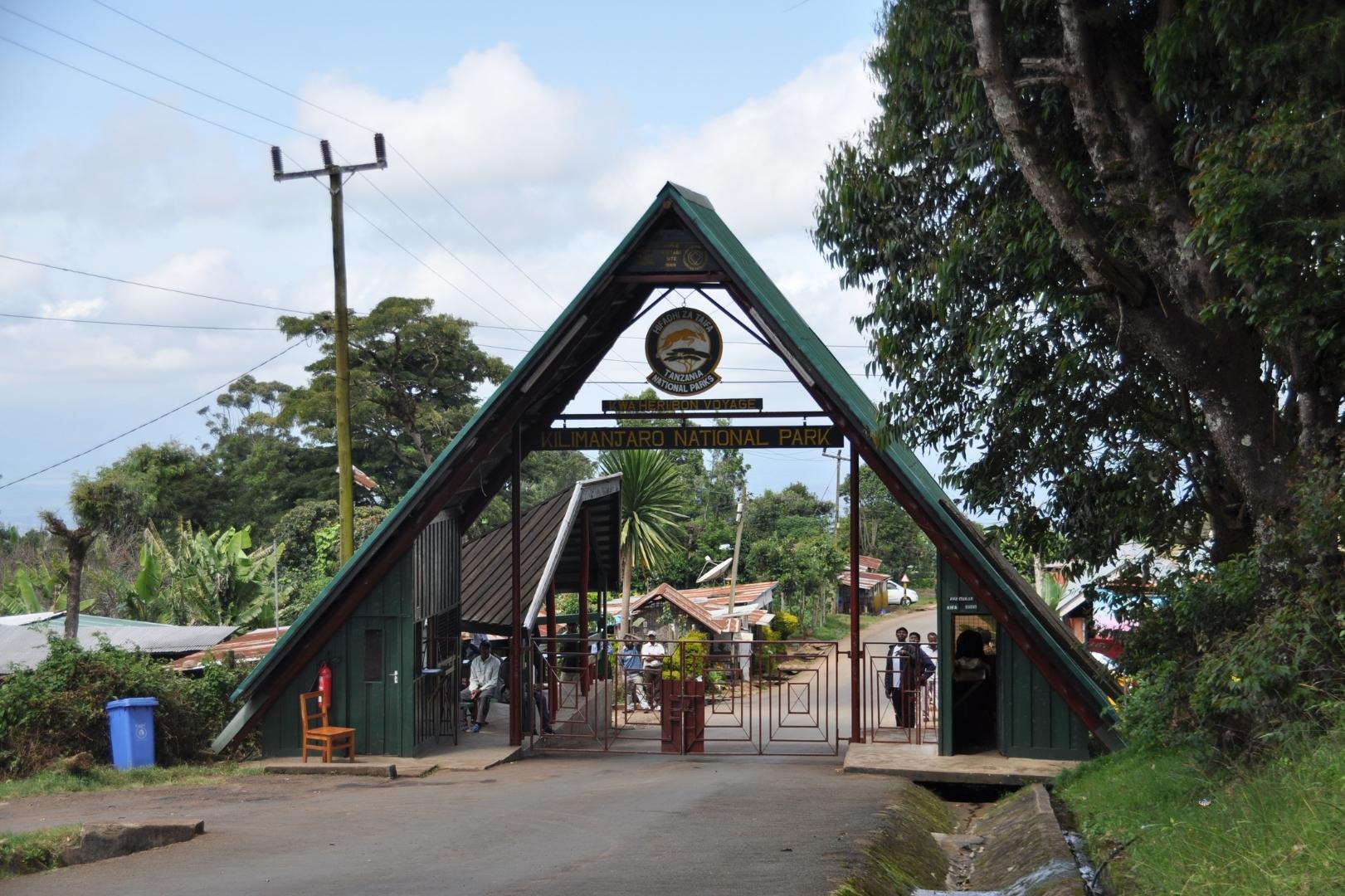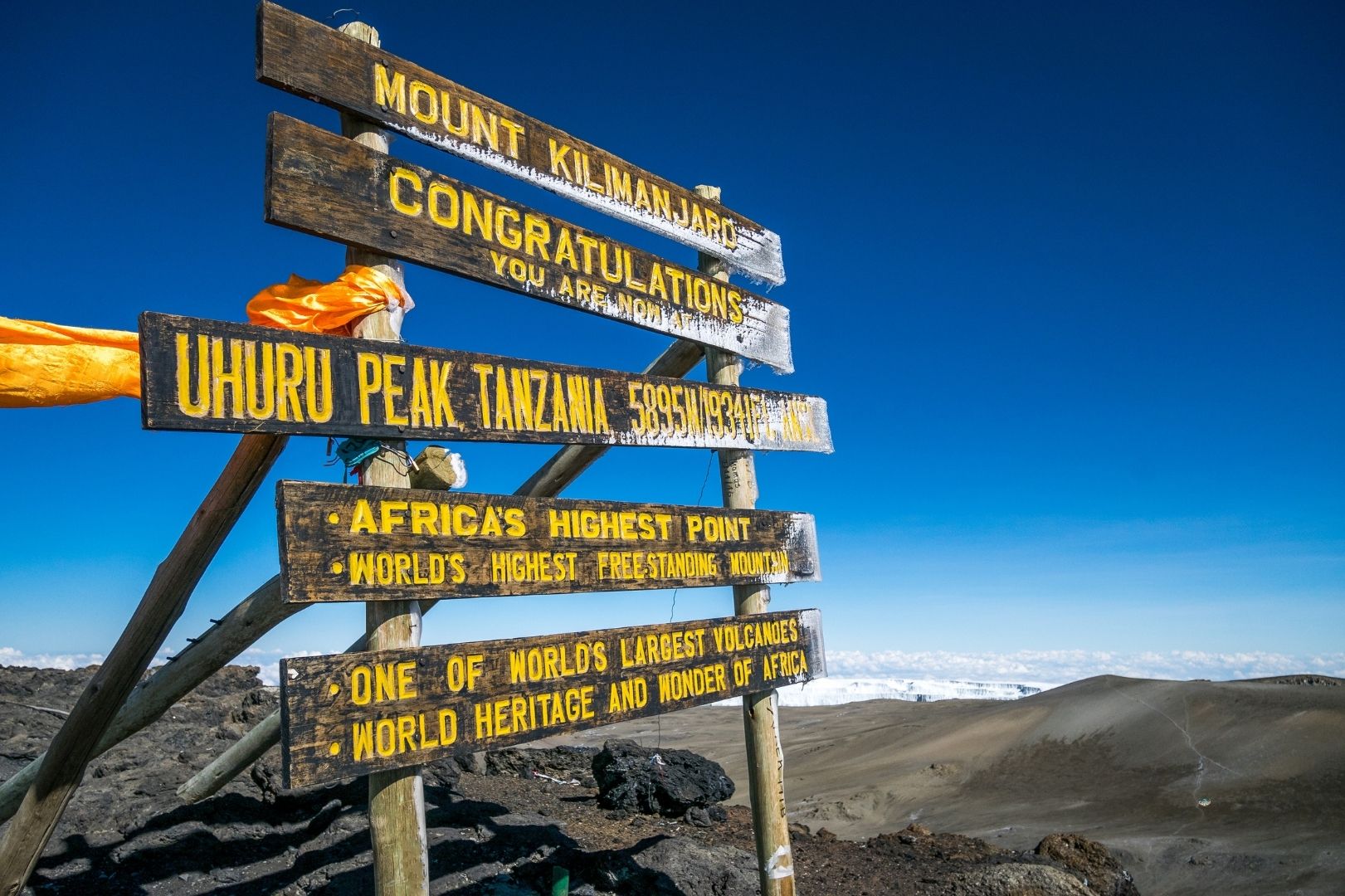
Kilimanjaro National Park is defined by a single breathtaking feature: Mount Kilimanjaro, the highest mountain in Africa and the tallest free standing mountain in the world. Rising 5,895 meters above the plains of northeastern Tanzania, this dormant volcano is a world unto itself, a snow capped giant that stands in solitary majesty just three degrees south of the equator. The park, established to protect the mountain above the treeline, covers just over 1,600 square kilometers, yet within that compact area lies an extraordinary journey through almost every ecosystem on earth.
Kilimanjaro is not a safari destination in the traditional sense. There are no lions or elephants on its slopes. Instead, it offers something rarer: the chance to walk from tropical rainforest to alpine desert to arctic ice cap in the span of a few days. Every year, thousands of trekkers from across the globe answer the mountain’s call, drawn not by the promise of wildlife sightings but by the challenge of standing on the rooftop of Africa. For those who make the ascent, the reward is a sunrise over the continent and a sense of accomplishment that lingers long after the altitude headaches fade.
While Kilimanjaro is rightly famous for its peak, the mountain’s lower slopes harbor a surprising richness of life. The rainforest zone, which wraps around the mountain from roughly 1,800 to 2,800 meters, is a lush, misty world of towering trees draped in moss and orchids. Here, elephants move along ancient migration corridors, though they are elusive and rarely seen. More common are troops of blue monkeys and black and white colobus monkeys, their striking coats flashing through the canopy. Bushbabies emerge at night, their large eyes reflecting in the beam of a headlamp.
As the forest gives way to heath and moorland, the wildlife shifts. Buffalo graze on the open slopes, often solitary old bulls that have left the herds behind. Duikers and bushbucks navigate the giant heather and lobelias, their silhouettes strange against the otherworldly vegetation. Birders find delight in the mountain’s endemics: the Kilimanjaro white eye, the mountain greenbul, and the scarlet tufted malachite sunbird.
Above 4,000 meters, life becomes sparse. A few hardy birds the alpine chat, the white necked raven patrol the scree slopes. Lizards dart between rocks. And then, eventually, there is only ice, rock, and sky. The wildlife of Kilimanjaro is subtle, often overlooked by those focused solely on the summit, but it adds a rich layer to the journey for those who take the time to look.
Kilimanjaro is defined by its vertical landscape. The mountain is not a single peak but a cluster of three volcanoes: Kibo, the highest and dormant; Mawenzi, a jagged spire of rock; and Shira, the oldest, now a collapsed caldera. From the surrounding savannah, the mountain appears as a single, snow capped dome, but climbing it reveals a succession of worlds.
The journey begins in the rainforest, a cathedral of towering trees where the air is thick with moisture and the sound of dripping leaves. Above it, the heath zone opens up, a landscape of giant groundsels and lobelias plants that look like they belong in a prehistoric world. These are the mountain’s most surreal creations, their spiky forms adapted to the daily freeze thaw cycle of the alpine zone.
Above the moorland lies the alpine desert, a stark, rocky expanse of scree and volcanic ash where nothing grows taller than a cushion plant. The air is thin, the sun intense, and the nights bitterly cold. At the top of this desert stands Kibo’s summit cone, its crater rim marked by the glaciers that have shrunk dramatically over the past century but still cling to the mountain’s highest reaches.
The final stage is the ascent to Uhuru Peak, the highest point on the crater rim. Standing there, watching the sun rise over the African plains far below, is to understand why Kilimanjaro has captured the imagination of explorers and dreamers for more than a century. Few places on earth offer such a concentrated journey through the layers of our planet. Fewer still reward the effort with a view that stretches across an entire continent.