Ngorongoro Crater is not a national park in the traditional sense it is a world unto itself. Formed over two and a half million years ago when a volcano the size of Kilimanjaro collapsed inward, this caldera stretches roughly 260 square kilometers on the crater floor, making it the largest unbroken, inactive volcanic caldera on earth.
While it sits within the greater Ngorongoro Conservation Area, a UNESCO World Heritage Site, the crater is the crown jewel. Descending the steep, forested rim feels like leaving the modern world behind. Below lies a self‑contained ecosystem so dense with wildlife that most visitors check off the Big Five before lunch.
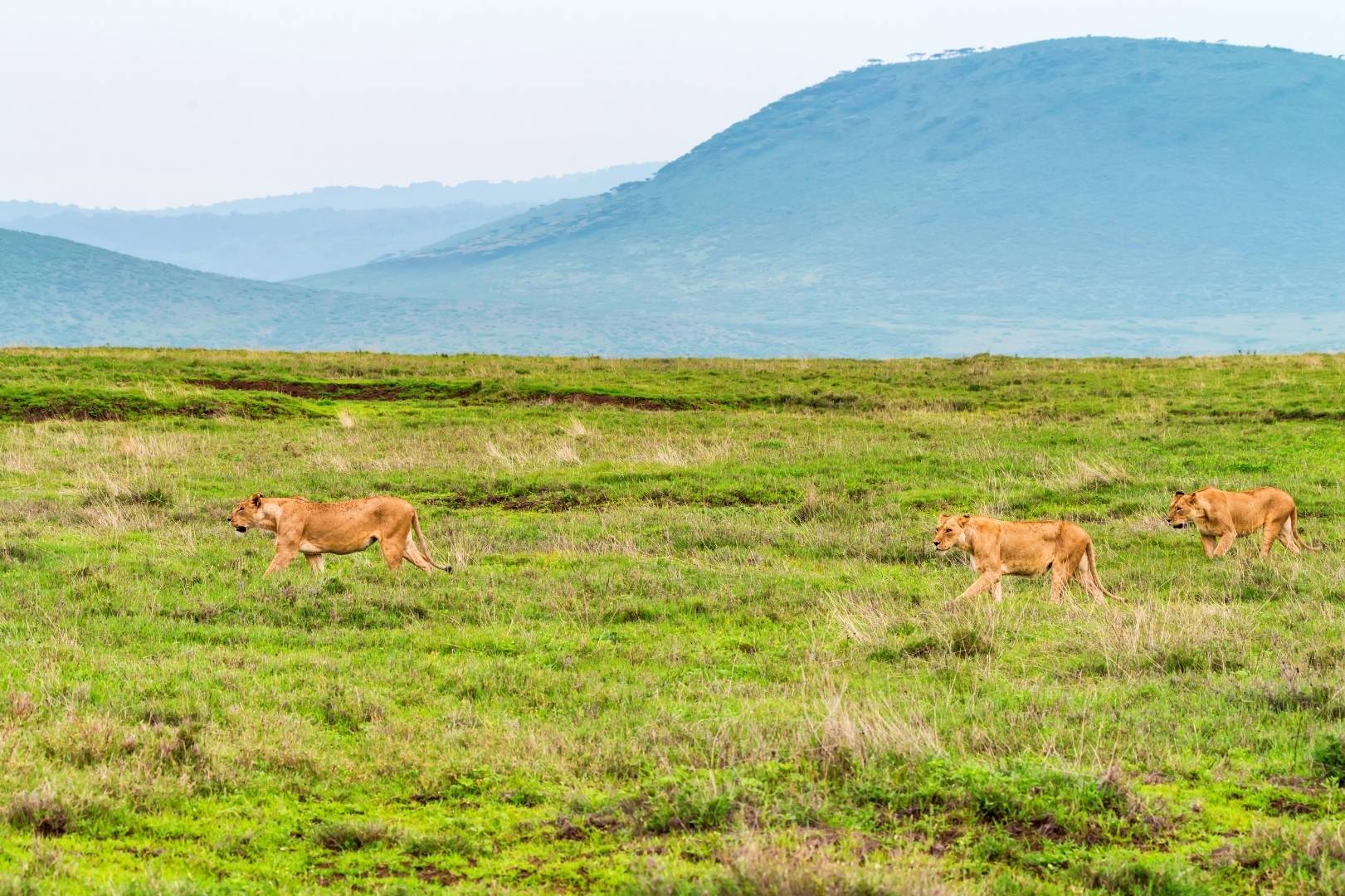
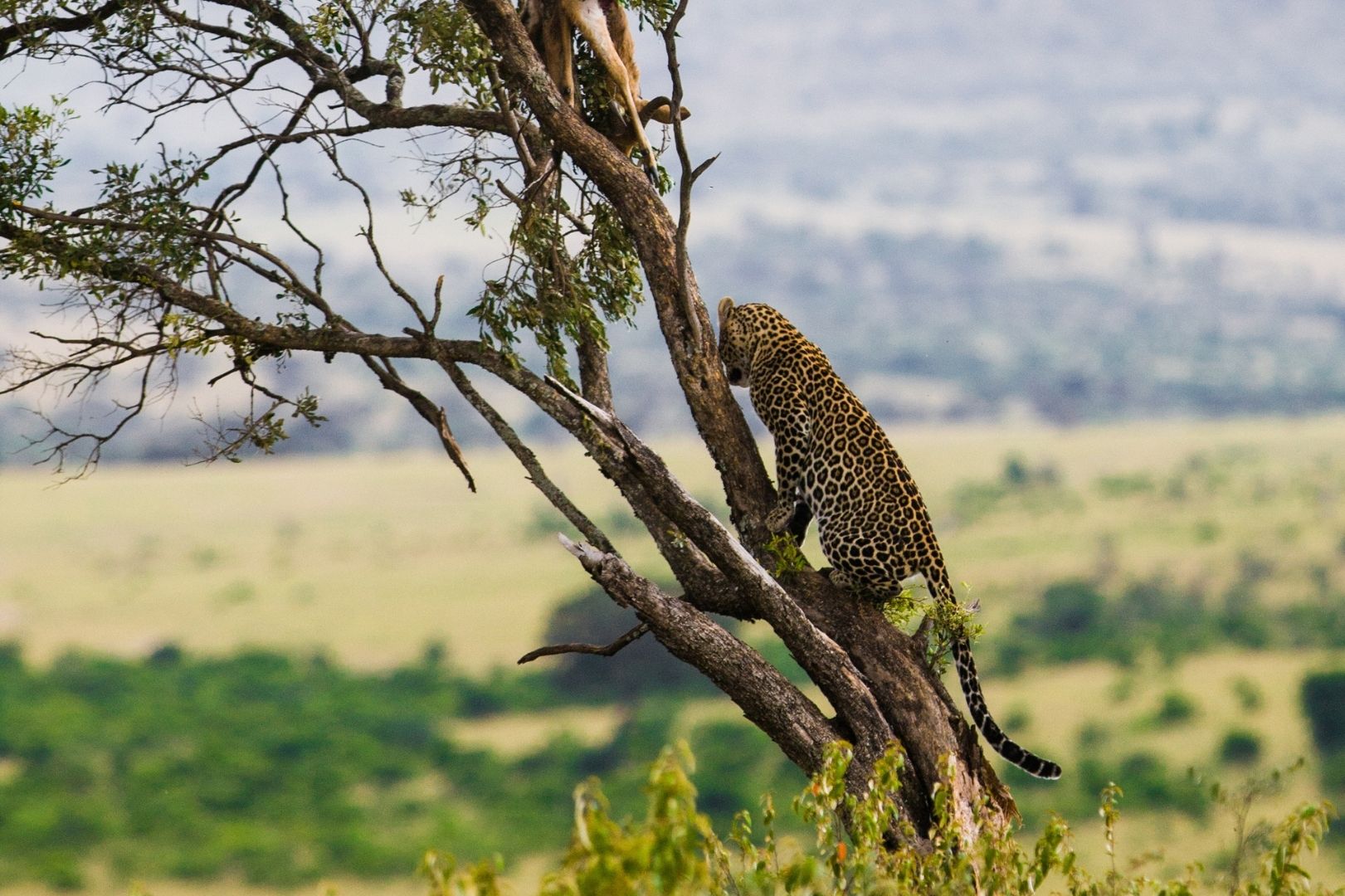
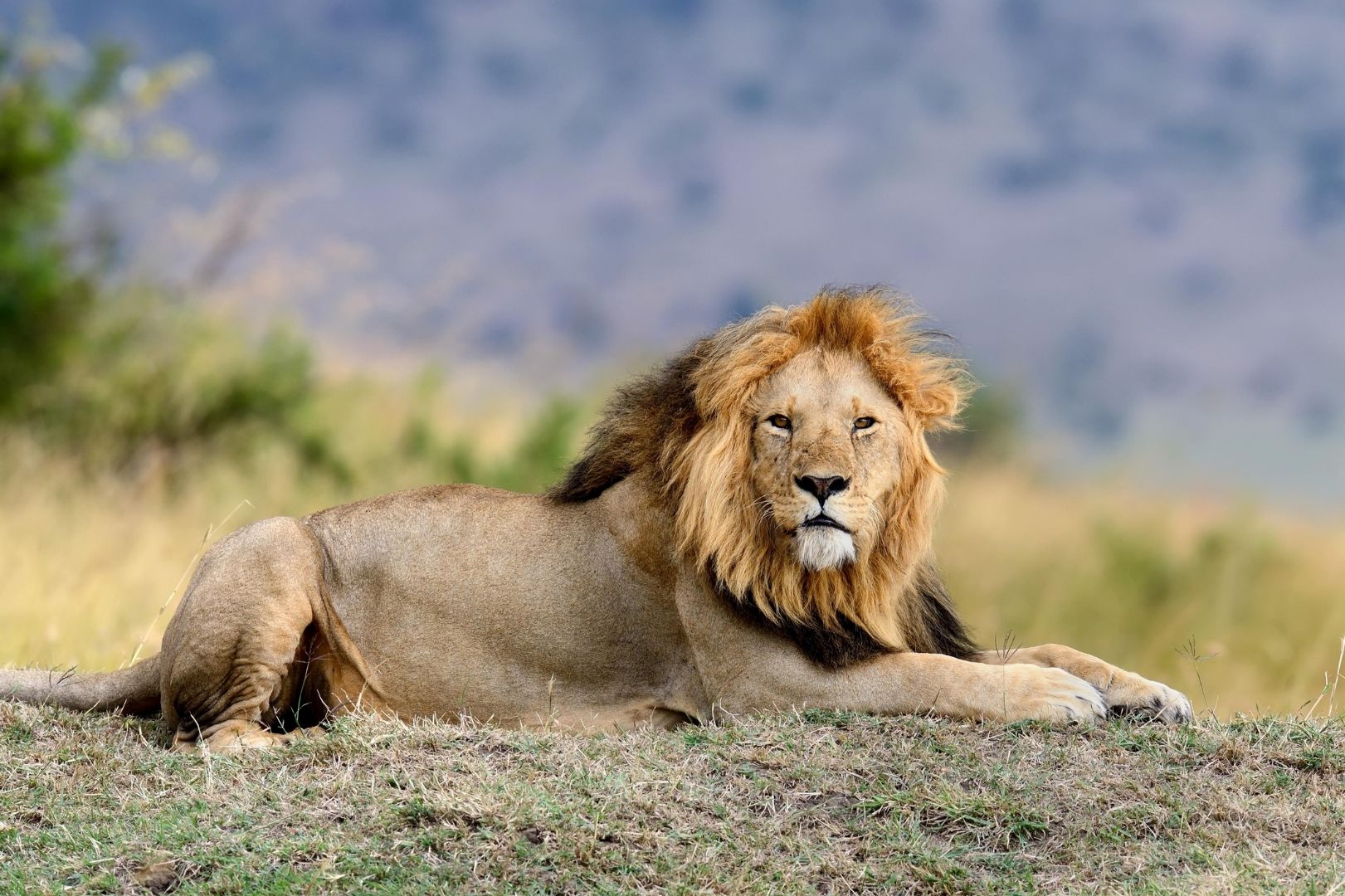
The crater is famous for its resident black rhino population one of the few places in Tanzania where sightings are reliably frequent. Lions thrive here in surprising numbers, often spotted resting on the open grasslands after a morning hunt. Leopards stake their claim in the acacia forests along the rim, while elephants move through the highland forests above. Buffalo herds, sometimes hundreds strong, kick up dust as they cross the floor.
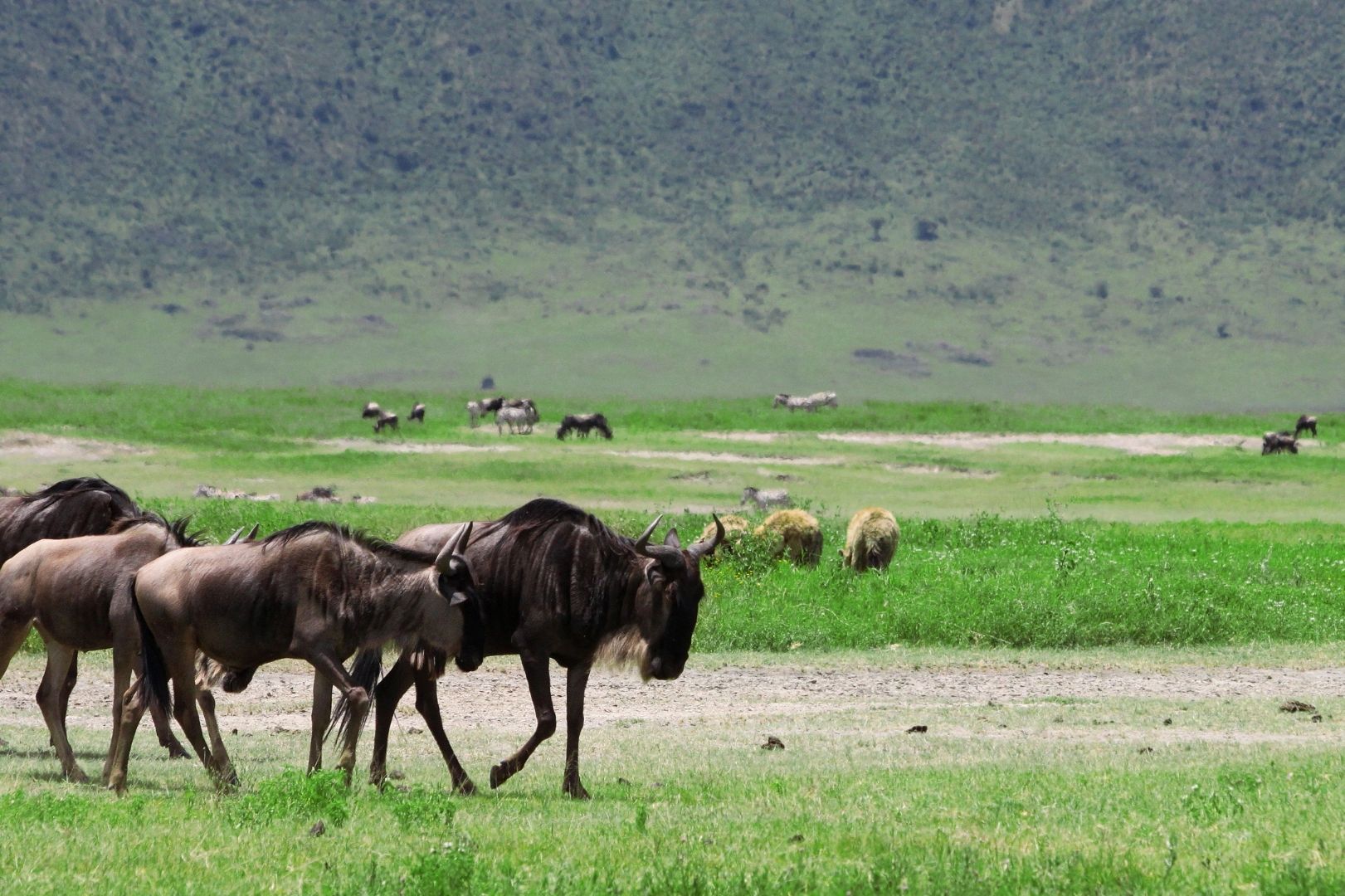
But the Big Five are only the beginning. Spotted hyenas are everywhere, their complex social plays unfolding in full view. Golden jackals dart between grazing zebras, and the endangered African wild dog makes occasional appearances. On the southern edge, Lake Magadi shimmers with thousands of lesser flamingos, while crowned cranes and ostriches roam the grasslands. With over 400 bird species recorded, the crater is as much a birder’s paradise as it is a predator haven.
What makes Ngorongoro truly unforgettable is the geography. The steep, mist‑draped rim stands 600 meters above the floor, creating a natural amphitheater that traps wildlife inside and offers visitors a single, spectacular vantage. From the viewing points at the top, the crater stretches below like a lost world open grasslands, acacia woodlands, swamps fed by perennial springs, and the soda lake that shifts from white to pink with the seasons.
Driving onto the floor, the landscape transforms with every kilometer. One moment you’re weaving through yellow‑barked acacia forest where leopards might be watching; the next you’re crossing open plains dotted with grazing wildebeest, the distant calls of hyenas echoing across the bowl. Few places on earth pack so much diversity into such a compact space, and fewer still offer the certainty of extraordinary wildlife against a backdrop that feels as ancient as time itself.