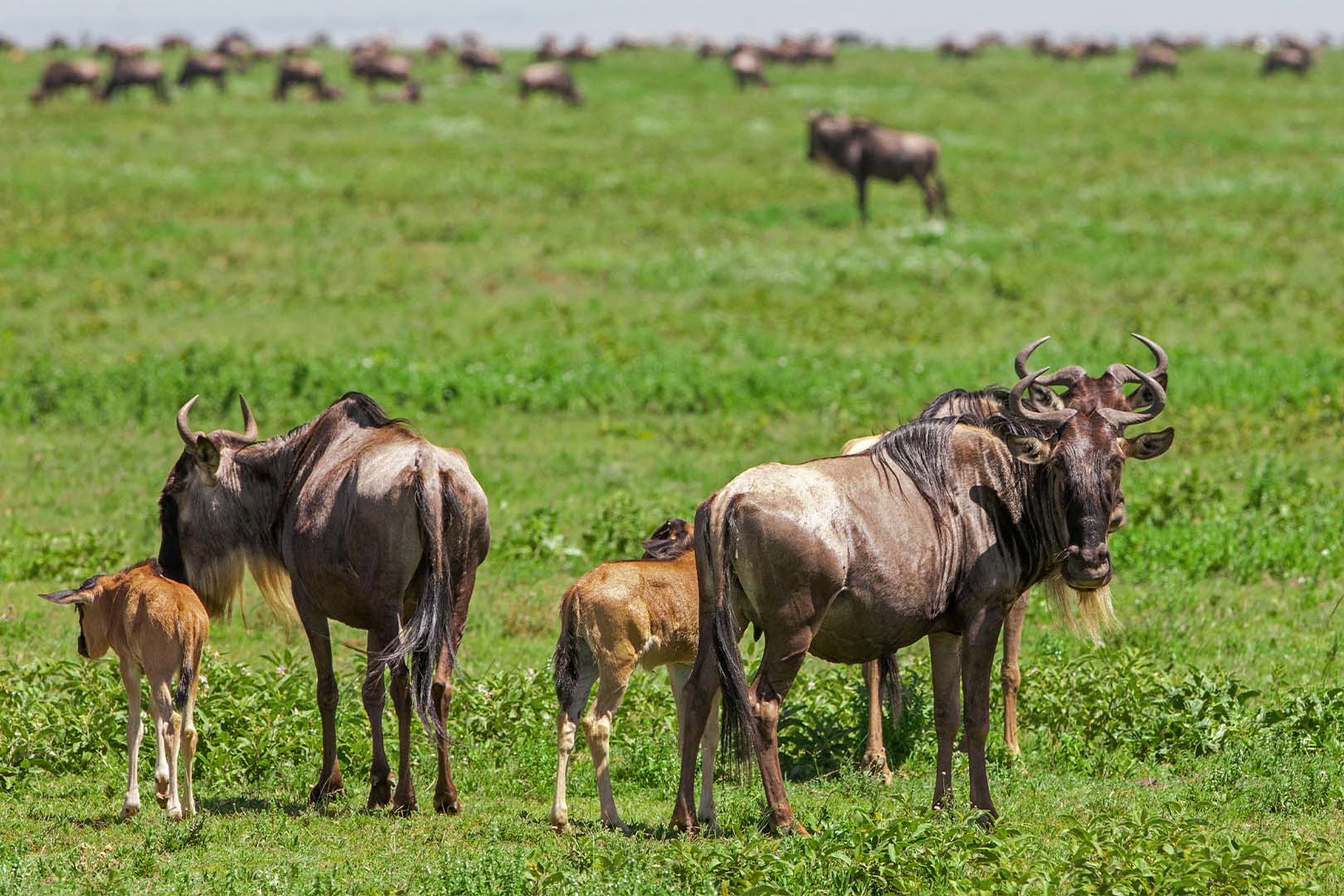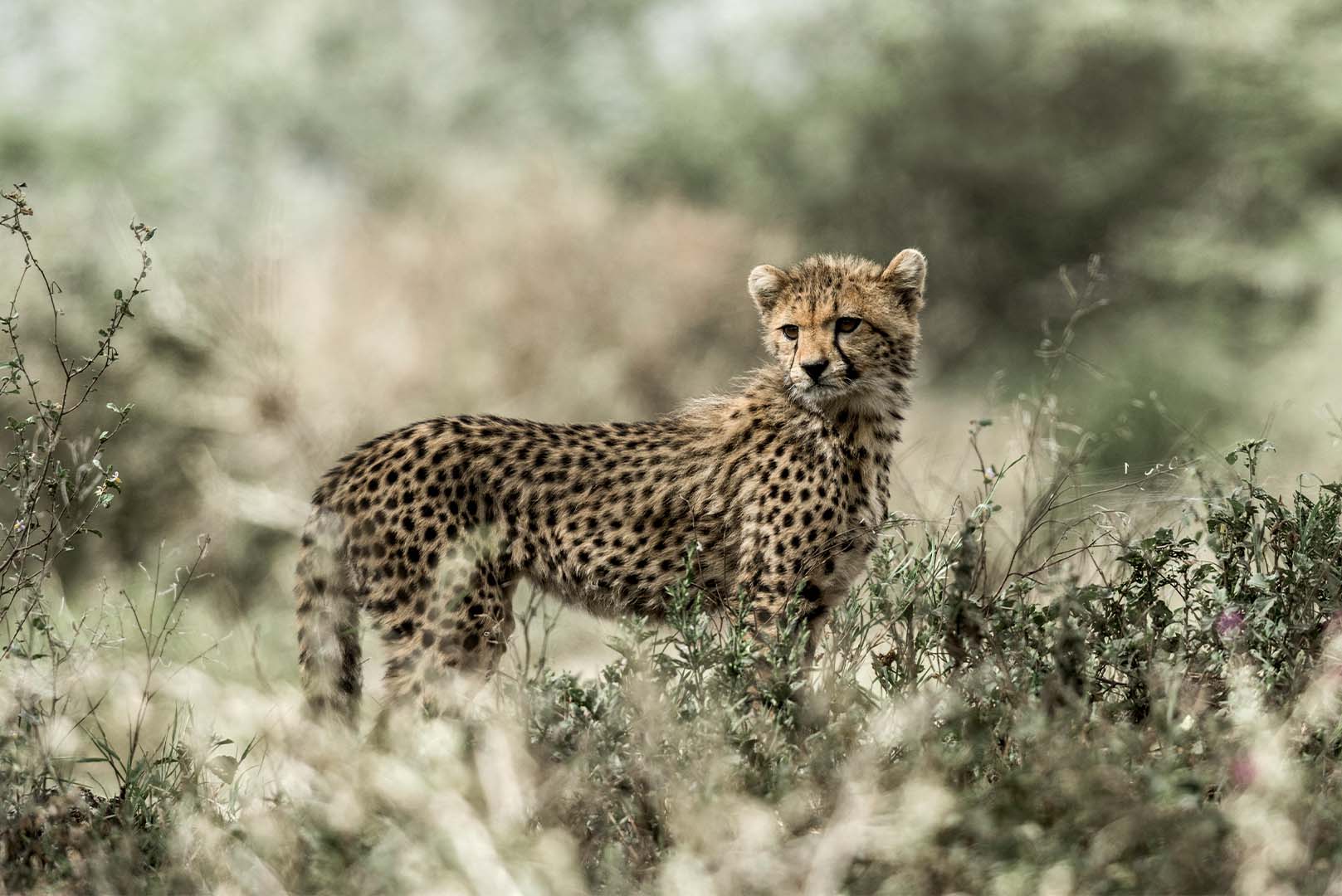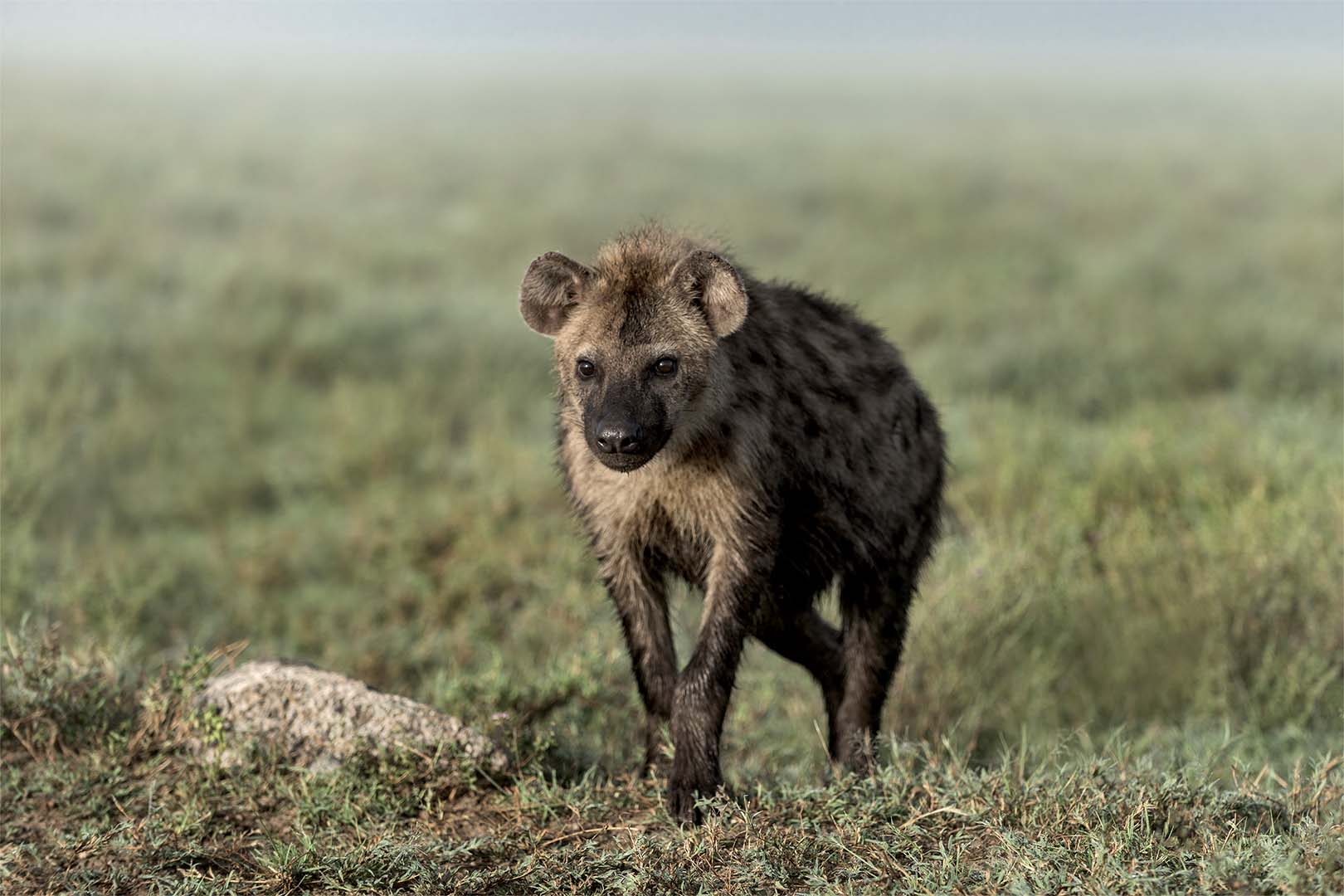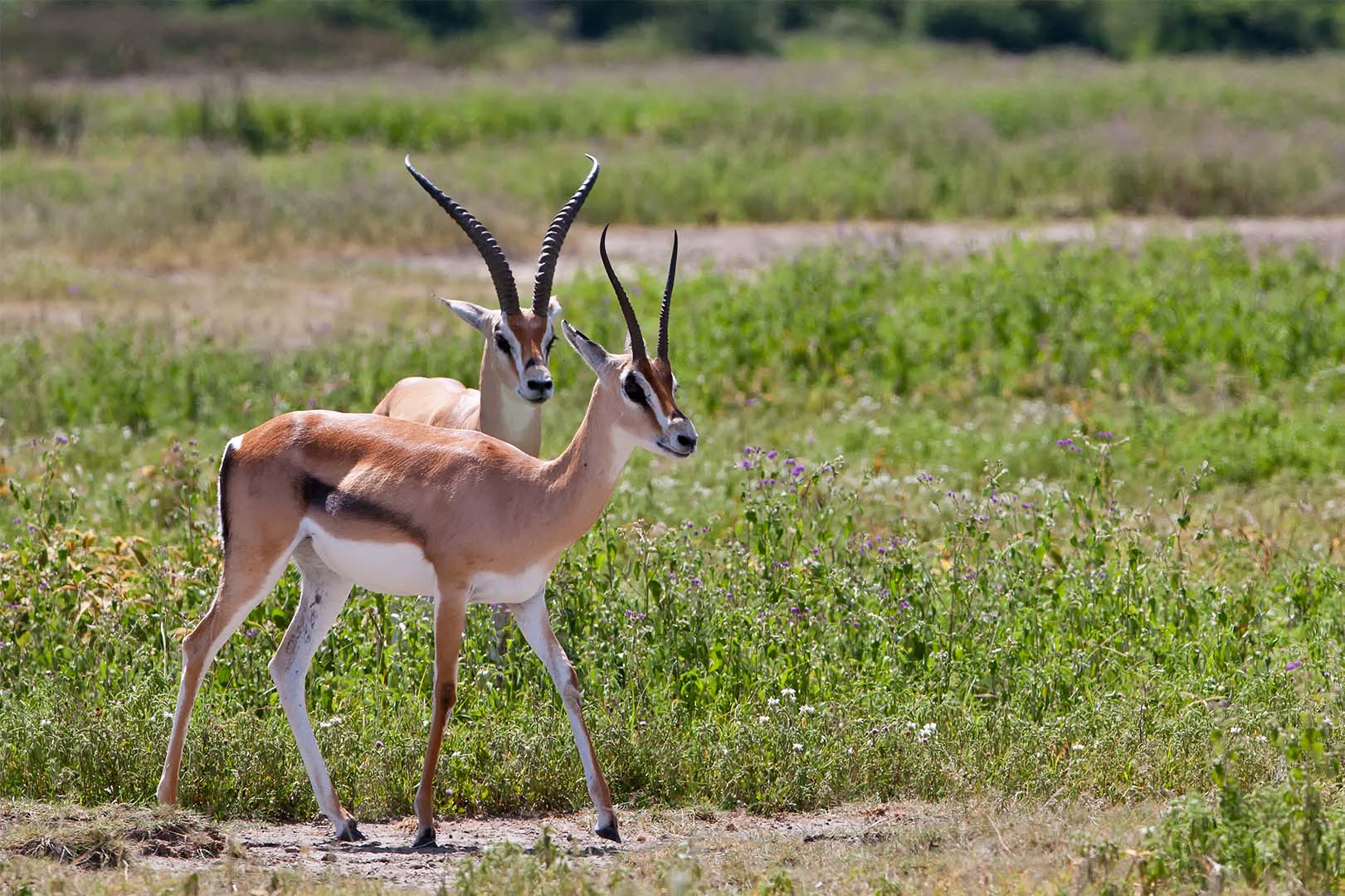
The Serengeti needs no introduction, but it never fails to exceed expectations. Covering nearly 15,000 square kilometers of open savannah, the name itself says everything. Serengeti means “endless plains” in Maasai, and standing in the middle of it, you’ll understand exactly why.
This is Tanzania’s most celebrated national park, a UNESCO World Heritage Site, and the stage for one of the greatest wildlife spectacles on earth, the Great Wildebeest Migration.
The Serengeti is far more than migration season. These plains are home to over 4,000 lions, one of the highest concentrations on the continent, alongside 1,000 leopards, 225 cheetahs, and 3,500 hyenas. Wildebeest, zebras, gazelles, and buffaloes move in vast numbers across the open grasslands, keeping the predator population thriving year-round.
The Big Five lion, leopard, elephant, buffalo, and rhino can all be tracked within the park. Rarer sightings include the pangolin and East African Oryx, making every game drive genuinely unpredictable.
The Serengeti is not one landscape; it is many. Iconic acacia-dotted savannahs stretch into mountains, hidden lakes, and vast swamps, each carrying its own ecosystem and its own cast of wildlife. This extraordinary ecological range earned the Serengeti its UNESCO World Heritage status, a recognition of both its natural beauty and its global significance.
Few places on earth carry this kind of weight. Fewer still deliver on it every single time.